Chocolate Bar Packaging Machine and Flow Wrapper
A chocolate bar packaging machine normally uses horizontal flow wrapping to make pillow packs around chocolate, candy, energy or wafer bars. Surface temperature, scuffing, breakage and precise printed-film registration can affect pack quality, so the machine and production environment must keep bars consistently oriented and clear of the sealing zones.
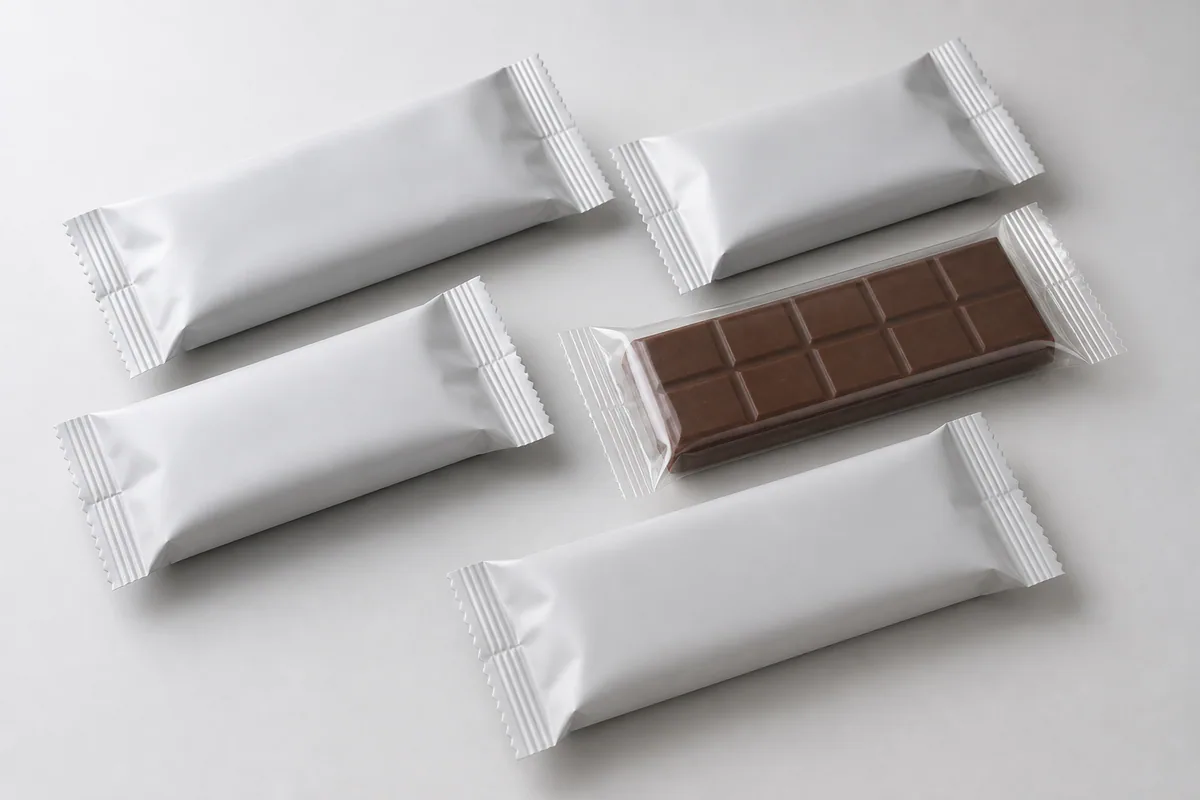
Illustrative packaging example
Chocolate Wafer Bar Packaging Video
This industry demonstration shows long chocolate-coated wafer bars wrapped individually in printed pillow-pack film. The HFFS machine feeds each bar, forms the film, creates the longitudinal seal, then completes the end seal and cut. Chocolate bars, wafer bars, protein bars and similar products still require their own dimensions, surface, film and temperature test.
Chocolate Wafer Bar HFFS Flow Wrapper Demo
Click to watch wafer-bar feeding, printed-film sealing and finished packs
Published HYS Configuration Facts
- HFFS model range: HFS-260, HFS-350 and HFS-450
- Published speed range: 20–250 packs/min
- Published finished bag widths: 25–110, 25–150 and 50–200 mm by model
- Published suitable film thickness: 0.03–0.06 mm
Final model, options and output are confirmed from product and package samples.
Custom functions: Nitrogen flushing, dust extraction, metal detection and checkweighing require a customized machine or line configuration.
Chocolate, Candy, Energy and Wafer Bar Formats
- Chocolate bars: require controlled temperature, gentle guides and clean clearance at both end seals.
- Candy and protein bars: may be sticky or irregular and must be evaluated for transfer, film contact and sealing contamination.
- Energy and cereal bars: can shed crumbs or inclusions, so product spacing and seal-zone cleanliness matter.
- Wafer bars: are fragile and require gentle feeding, limited impact and enough bag clearance to reduce edge damage.
Temperature and Product Handling
- Provide bar length, width, height, weight and acceptable surface-contact method.
- Product temperature and room conditions should prevent softening, bloom or transfer to guides.
- Flights and guides must maintain pitch without chipping corners or marking the surface.
- Automatic feeding must be matched to the molding, cooling or upstream conveyor output.
Printed Film and Sealing
- Confirm film structure, thickness, friction, eye-mark position and heat-seal window.
- Artwork registration should be tested at the intended speed.
- Bag dimensions must leave clean end-seal clearance beyond the chocolate bar.
- Seal temperature and dwell must protect both package integrity and product appearance.
Acceptance Test Inputs
- Product samples at realistic production temperature.
- Printed or plain film roll and final pack dimensions.
- Required good packs per minute and upstream spacing.
- Coding, easy-open, reject and downstream carton requirements.
Related applications: biscuit and cookie packaging, bread packaging, and candy packaging.
Chocolate Bars, Candy Bars and Nutritional Bars
The phrase chocolate bar packaging machine covers several products that look similar on a conveyor but behave differently during wrapping. Solid chocolate tablets may have clean rectangular edges, while enrobed bars can have a soft coating that marks easily. Wafer bars and layered products are lighter and more fragile. Protein, energy, cereal and granola bars may be sticky, irregular or covered with loose inclusions.
These differences affect guide contact, transfer speed, bag clearance and the risk of material entering the end seal. A flow wrapper may store recipes for several sizes, but every bar must remain inside the selected forming and sealing ranges. Width or height changes can require forming-set adjustment, and a different surface condition may require a different contact material or feeding approach.
Automatic Feeding, Distribution and Product Spacing
Stable chocolate packaging starts before the product enters the wrapping section. Bars leaving a molding, cooling or upstream processing line may arrive continuously, in rows or with changing gaps. A manual-feed machine depends on operators placing each bar between conveyor flights. A semi-automatic system can improve spacing while retaining manual loading. A fully automatic chocolate packaging line requires distribution, alignment and buffering designed around the upstream flow.
The infeed conveyor must deliver one product at the correct pitch for every package cycle. Side guides should control direction without rubbing or chipping the product. Transfers between belts need small, stable gaps. Sensors and servo motion coordinate product position with printed-film registration and the end-sealing jaws.
When the upstream line pauses or surges, a suitable accumulation or buffering strategy may be required. The final automatic feeding system is therefore customized from product dimensions, arrival pattern and target good packs per minute; it cannot be selected from the wrapper speed alone.
Heat-Sensitive Chocolate and Gentle Product Handling
Chocolate temperature affects surface strength, friction and resistance to pressure. A bar that is stable after cooling may soften in a warm production room or after a pause on the conveyor. Product guides, flights and the forming area should avoid unnecessary pressure and sharp contact. Wafer corners and coated surfaces require enough clearance to prevent rubbing while still maintaining reliable orientation.
The sealing process must also be reviewed with the actual film and bar. Longitudinal and end-seal temperatures, dwell time and production speed influence package integrity. Heat-sensitive products may require additional separation from hot components or a different validated film solution. HYS does not assume a cold-seal process from the product name; the required sealing method must be confirmed before machine configuration.
Printed Film, Pillow Packs and Finished Appearance
Most chocolate bar flow wrappers produce an individual pillow pack with a longitudinal fin seal and two end seals. The finished bag needs enough length beyond the product to create clean end seals without excessive loose film. Film width must cover the product perimeter and fit the machine. Thickness, stiffness, friction and heat-seal range affect tracking and seal quality.
Printed packaging requires a usable eye mark, correct print repeat and artwork orientation. Registration should be evaluated at the intended production speed. Coding, easy-open features and downstream handling also affect the final package. A visually centered wrapper is not sufficient if the seal catches chocolate, crumbs or inclusions, so appearance and seal integrity must be checked together.
Changeover and Chocolate Packaging Line Integration
A manufacturer running several bar sizes should provide the complete product matrix before selecting a machine. Bag length can often be adjusted through recipes, while major width or height changes may require forming parts, guide adjustments and a new film roll. Changeover planning should include cleaning, temperature settings, print registration and a short verification run before normal production resumes.
The wrapper can be considered as a standalone manually fed machine or part of a larger line. Upstream product delivery, optional coding, customized metal detection or checkweighing, reject handling and downstream carton loading must operate at compatible rates. These functions are not assumed standard and must be included in the project review.
Send Chocolate and Film for a Free Packaging Test
Customers can send chocolate bars, candy bars, energy bars, protein bars, cereal bars or wafer bars to the HYS factory for a free machine test. Provide product length, width, height, weight, normal production temperature, target package dimensions and printed or plain film. Also state the upstream arrival pattern, required good packs per minute and acceptable product-damage criteria.
The test reviews feeding stability, film tracking, eye-mark registration, package clearance, seal appearance and product condition after wrapping. Results apply to the tested product and material. A similar bar shape can guide the initial machine choice, but a different coating, temperature or film still requires confirmation.
Chocolate Packaging Machine Buyer Checklist
Before requesting a quotation, define whether the project needs a standalone chocolate bar wrapping machine or an integrated packaging line. Record every product size, the normal and maximum upstream rate, the minimum gap between products, working temperature and available floor space. Identify whether operators will load products manually or whether the wrapper must receive bars automatically from cooling or production equipment.
Also provide the final pillow-pack dimensions, film width, print repeat, eye-mark position, seal requirements, coding location and downstream process. If several chocolate, candy, protein or wafer bars share the line, list them together so forming parts and changeover requirements can be reviewed before the machine is selected. This information allows HYS to separate standard HFFS functions from customized feeding, inspection and line-control work.