HFFS Application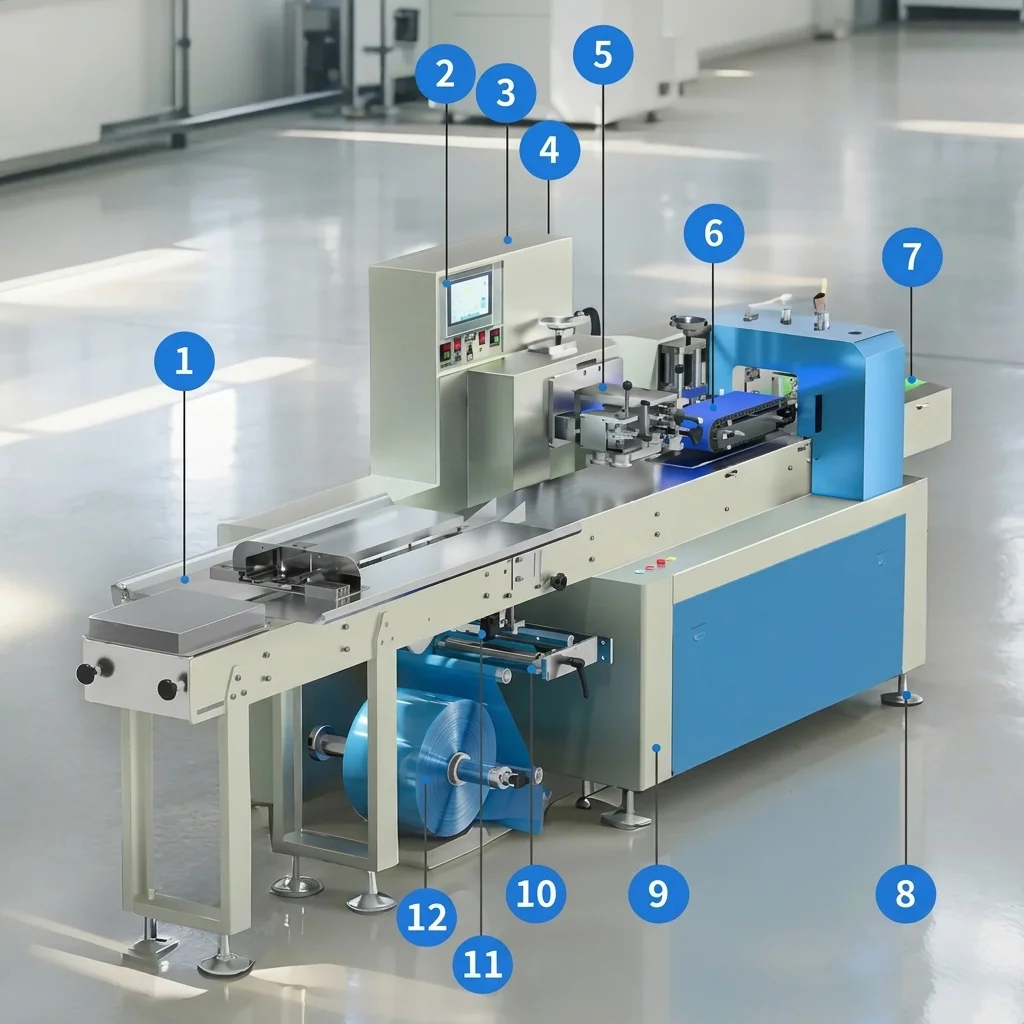
Upward vs Downward Film Feed Flow Wrapper
Upward and downward film feed describe how packaging film approaches the product in a horizontal flow wrapper. The choice affects which side of the product contacts film first, where the longitudinal seal is positioned and how unstable, sticky or irregular products are supported. Terminology varies between suppliers, so HYS confirms the required film path from the actual product and pack.
Published HYS Configuration Facts
- HFFS model range: HFS-260, HFS-350 and HFS-450
- Published speed range: 20–250 packs/min
- Published finished bag widths: 25–110, 25–150 and 50–200 mm by model
- Published suitable film thickness: 0.03–0.06 mm
Final model, options and output are confirmed from product and package samples.
Custom functions: Nitrogen flushing, dust extraction, metal detection and checkweighing require a customized machine or line configuration.
Upward Film Feed
- Film approaches from below the product and typically supports it as it enters the forming area.
- This route may be evaluated for products that are difficult to push across a forming surface or need film beneath them early.
- Product transfer, film friction and the required longitudinal-seal position must be reviewed together.
- Suitability depends on the actual product rather than the word “upward” alone.
Downward Film Feed
- Film approaches from above while the product travels on the infeed and through the forming area.
- This common route can suit regularly shaped, stable products presented at controlled spacing.
- The product-contact surface, fin-seal orientation and forming-box clearance determine final compatibility.
- Fragile, sticky or irregular items still require sample testing and may need special feeding.
Selection Checklist
- Product dimensions, shape stability, surface condition and preferred contact side.
- Required longitudinal-seal location and finished pillow-pack appearance.
- Film structure, thickness, friction, print orientation and eye-mark position.
- Upstream feeding, target output, cleaning and downstream handling requirements.
Frequently Asked Questions
No. It may help some products, but stability, transfer, film friction, seal location and cleaning requirements must all be evaluated.
Terminology varies by manufacturer. The reliable specification is the actual film path, product support and longitudinal-seal position, confirmed with drawings and samples.